ENTERTAINMENT:CSI FUNNY--(this is TV: NOT real)
SOCIETY FORCES TECHNOLOGY?
http://www.youtube.com/watch?v=c7-10_CP45Y

Friday, June 19, 2009


Forensic scientists dust fingerprints with magnetic particles to reveal the hidden swirls and curls that differentiate each person on the planet. The iron oxide particles attach themselves to the tiny bits of water, minerals, and oils that accumulate on the fingers as they touch various objects and other parts of the body. Coming up: in the "Present" new fingerprinting techniques that use antibodies on your fingers to reveal drug use,gun use, and much more. http://dsc.discovery.com/news/2008/12/10/fingerprint-drugs.html
VIDEO:The ballistics pendulum was invented in 1742 to measure the speed of bullets. http://www.youtube.com/watch?v=oNGm4mVWMuY
Thursday, June 18, 2009

Forensic Ballistics
Forensic ballistics is concerned with analysing bullets and firearms that have been used in crimes.
Rifling
Identification of a bullet became possible with the advent of rifling as far back as the 1400s. Rifling is a process of applying grooves to a gun barrel which cause the bullets fired to have grooves, indentations and scratches on them. These marks on the bullets are unique to the weapon that fired them. The first recorded case of firearm identification being used to identify the shooter was back in 1835 in England. Oliver Wendell Holmes
In 1902 Oliver Wendell Holmes became the first person to produce ballistics information in a court of law. Having done some reading on firearm identification he used a gunsmith to fire the suspected firearm into cotton wool. This test bullet was then compared to the one recovered from the victim. Under microscope it was proven that both had been fired by the same gun.
Calvin Goddard
Calvin Goddard compiled a database of all the guns available from twelve different manufacturers, including test firing data. He later invented the comparison microscope that allowed two bullets to be viewed side by side for ease of examination.
In 1925 Goddard wrote a piece for the “Army Ordnance” in which he described in detail the use of his comparison microscope for firearm investigations. He titled this article “Forensic Ballistics”, a term which has been retained ever since.
http://forensicsfaq.com/forensic-ballistics.html
Identification of a bullet became possible with the advent of rifling as far back as the 1400s. Rifling is a process of applying grooves to a gun barrel which cause the bullets fired to have grooves, indentations and scratches on them. These marks on the bullets are unique to the weapon that fired them. The first recorded case of firearm identification being used to identify the shooter was back in 1835 in England. Oliver Wendell Holmes
In 1902 Oliver Wendell Holmes became the first person to produce ballistics information in a court of law. Having done some reading on firearm identification he used a gunsmith to fire the suspected firearm into cotton wool. This test bullet was then compared to the one recovered from the victim. Under microscope it was proven that both had been fired by the same gun.
Calvin Goddard
Calvin Goddard compiled a database of all the guns available from twelve different manufacturers, including test firing data. He later invented the comparison microscope that allowed two bullets to be viewed side by side for ease of examination.
In 1925 Goddard wrote a piece for the “Army Ordnance” in which he described in detail the use of his comparison microscope for firearm investigations. He titled this article “Forensic Ballistics”, a term which has been retained ever since.
http://forensicsfaq.com/forensic-ballistics.html
Computer Analysis and Response Team (CART)
The premiere computer forensic group in the United States is the FBI's Computer Analysis and Response Team or CART. CART dates back to the mid 1980's and it derived from the FBI's magnetic media program. The link in the title of this post is the FBI's webpage for CART. It gives a brief background of the team and also highlights some of their accomplishments. (Link in Title)
Computer Froensics Time line
Computer Forensics is really still in its infancy. Its history only goes back about two decades. Here is a basic time line of the history of computer forensics around the world.
(Link in Title)
(Link in Title)
Wednesday, June 17, 2009
Polygraph Machine Video
This video shows the beginning of the polygraph machine and development. The real question is can the machine scientifically measure if someone is lying or are all those graphs and numbers just pseudoscience? The examiner starts off with control questions and then goes to guilt questions. Can we tell if someone is lying through body language or facial expressions? Their are many questions and no reliable way to detect if someone is lying.
Polygraph Machine
 An earlier and less successful lie detector or polygraph machine was invented by James Mackenzie in 1902. However, the modern polygraph machine was invented by John Larson in 1921. John Larson, a University of California medical student, invented the modern lie detector (polygraph) in 1921. Used in police interrogation and investigation since 1924, the lie detector is still controversial among psychologists and is not always judicially acceptable. The name polygraph comes from the fact that the machine records several different body responses simultaneously as the individual is questioned.
Tuesday, June 16, 2009
Digital Evidence: Its True Value

Here is an interesting article on digital evidence. It talks about how a floppy disk led investigators to a serial killer. The evolution and new technology advances have solved many crimes as you can see by reading this article. Many cases and criminals were found using a simple floppy disk. Read the following article...
DNA Laboratories have come a long way..
Before 1990, the majority of U.S. forensic laboratories were associated with law enforcement agencies, yet received a relatively small portion of their given agency’s total budget. In general, laboratories performed a range of services including drug testing, firearm examinations, bullet comparisons, paint chip characteristics, assessment of tool marks, serology, handwriting analysis, and fingerprint comparisons. Laboratory personnel received training in fingerprints, basic and advanced blood stain and bullet pattern analysis, evidence collection, and crime scene processing. Due to the length of time and high cost required to obtain probative information, large numbers of samples were not processed.
Law enforcement relied upon forensic laboratories to provide a basic level of discrimination of biological evidence. Analyses of this evidence in cases involving intimate contact were conducted using serological tests such as ABO blood typing and analysis of polymorphic isoenzymes such as Esterase D to enhance the power of discrimination. Discrimination of protein markers was achieved largely through immunological methods or electrophoretic methods using starch gels or isoelectric focusing plates. Phenotyping of biological evidence was possible but required technical expertise and was subject to certain limitations such as the need for fresh semen samples in the analysis of sexual assault evidence. Overall, the typing methods in use provided limited discrimination and lacked the capability to individualize biological evidence. In some cases, individuals who could not be excluded on the basis of serological analysis were exonerated years later through DNA testing.
More on article go to: http://www.forensicmag.com/articles.asp?pid=30
Law enforcement relied upon forensic laboratories to provide a basic level of discrimination of biological evidence. Analyses of this evidence in cases involving intimate contact were conducted using serological tests such as ABO blood typing and analysis of polymorphic isoenzymes such as Esterase D to enhance the power of discrimination. Discrimination of protein markers was achieved largely through immunological methods or electrophoretic methods using starch gels or isoelectric focusing plates. Phenotyping of biological evidence was possible but required technical expertise and was subject to certain limitations such as the need for fresh semen samples in the analysis of sexual assault evidence. Overall, the typing methods in use provided limited discrimination and lacked the capability to individualize biological evidence. In some cases, individuals who could not be excluded on the basis of serological analysis were exonerated years later through DNA testing.
More on article go to: http://www.forensicmag.com/articles.asp?pid=30
Wednesday, June 10, 2009
DNA Forensics in Marine Ecology
DNA Forensics in Marine Ecology
This video speaks about rapid mothods for sequencing DNA which has resulted in major advances in our understanding of the evolution and distribution of a wide variety of different marine organisms. Researcher, Ron Burton describes applications and the evolution of marine life throughout this video. It puts a great perspective to DNA forensics on Ocean Science and Marine Ecology.
This video speaks about rapid mothods for sequencing DNA which has resulted in major advances in our understanding of the evolution and distribution of a wide variety of different marine organisms. Researcher, Ron Burton describes applications and the evolution of marine life throughout this video. It puts a great perspective to DNA forensics on Ocean Science and Marine Ecology.
Monday, June 8, 2009
Forensic Science Center Update
FOR MOST PEOPLE, "forensic science" means cops and fingerprints and DNA analysis. All of that is still true, but these days forensic science encompasses much more. Some "whodunits" are more complicated and can involve an international cast of characters. Forensic science now also is used to verify and monitor compliance with such international agreements as the Nuclear Non-Proliferation Treaty and the Chemical Weapons Convention, and to learn whether a country is developing a clandestine nuclear weapons program. The Laboratory's Forensic Science Center was established in 1991, and in its short life has become a leader in law enforcement, national security, defense, and intelligence applications. Using sophisticated analytical equipment, experts in organic, inorganic, and biological chemistry can determine the composition and often the source of the most minute samples of material. Lasers are also being used to "interrogate," or examine, a variety of materials. The March 1994 issue of Energy & Technology Review described in detail the workings of the Forensic Science Center. It reported on the Center's excellent performance in a "round-robin" series of exercises with analytical chemistry facilities from around the world. The Center has done so well in these exercises over the years that it is no longer just a participant. Its staff also prepares samples for other laboratories to analyze. Following is an update on activities at the Forensic Science Center since early 1994.
Miniaturizing the GC/MS The Forensic Science Center is also at the forefront in developing new, portable systems capable of real-time analysis in the field. These units have numerous applications, from identifying materials to support verification of the Chemical Weapons Convention to investigating criminal activities. Almost five years ago, the Center developed a suitcase-size gas chromatograph/mass spectrometer (GC/MS) for on-site identification of ultratrace (microgram or less) quantities of certain compounds in complex mixtures. The system weighed 68 kg (150 lb), which made it portable, but only barely. Three years later, the system's weight had been cut by more than half to 32 kg (70 lb), still a hefty load. Today, at 20 kg (44 lb), with an accompanying laptop computer, this system can realistically be considered portable. This rugged, all-metal vacuum vessel can be carried on board an airplane and put into the overhead compartment, while its accompanying generator and off-line vacuum reconditioning pumping unit travel in the baggage compartment.
Works cited: Science and Technology Review, August 1995
Miniaturizing the GC/MS The Forensic Science Center is also at the forefront in developing new, portable systems capable of real-time analysis in the field. These units have numerous applications, from identifying materials to support verification of the Chemical Weapons Convention to investigating criminal activities. Almost five years ago, the Center developed a suitcase-size gas chromatograph/mass spectrometer (GC/MS) for on-site identification of ultratrace (microgram or less) quantities of certain compounds in complex mixtures. The system weighed 68 kg (150 lb), which made it portable, but only barely. Three years later, the system's weight had been cut by more than half to 32 kg (70 lb), still a hefty load. Today, at 20 kg (44 lb), with an accompanying laptop computer, this system can realistically be considered portable. This rugged, all-metal vacuum vessel can be carried on board an airplane and put into the overhead compartment, while its accompanying generator and off-line vacuum reconditioning pumping unit travel in the baggage compartment.
Works cited: Science and Technology Review, August 1995
Saturday, June 6, 2009
History of Fingerprinting
 There are records of fingerprints being taken many centuries ago, although they weren't nearly as sophisticated as they are today. The ancient Babylonians pressed the tips of their fingertips into clay to record business transactions. The Chinese used ink-on-paper finger impressions for business and to help identify their children. However, fingerprints weren't used as a method for identifying criminals until the 19th century. In 1858, an Englishman named Sir William Herschel was working as the Chief Magistrate of the Hooghly district in Jungipoor, India. In order to reduce fraud, he had the residents record their fingerprints when signing business documents.
A few years later, Scottish doctor Henry Faulds was working in Japan when he discovered fingerprints left by artists on ancient pieces of clay. This finding inspired him to begin investigating fingerprints. In 1880, Faulds wrote to his cousin, the famed naturalist Charles Darwin, and asked for help with developing a fingerprint classification system. Darwin declined, but forwarded the letter to his cousin, Sir Francis Galton. Galton was a eugenicist who collected measurements on people around the world to determine how traits were inherited from one generation to the next. He began collecting fingerprints and eventually gathered some 8,000 different samples to analyze. In 1892, he published a book called "Fingerprints," in which he outlined a fingerprint classification system -- the first in existence. The system was based on patterns of arches, loops and whorls.
Article Cited: Watson, Stephanie. "How Fingerprinting Works". May 26 2008. Hand News, Boston 2008. 06 June 2009. http://www.handresearch.com/news/how-fingerprinting-works.htm
Is Fingerprint Identification a "Science"?
Fingerprint identification has been around for a long time. It has nearly a century of court acceptance in the United States. Yet, in the aftermath of United States Supreme Court cases like Daubert v. Merrell Dow Pharmaceuticals (1993) and Kumho Tire v. Carmichael (1999), requiring courts to determine the reliability (validity) of underlying techniques before admitting expert opinion based on it, questions are bound to be raised about the scientific legitimacy of many of the techniques commonly used in crime laboratories, fingerprint identification among them.
Skilled examiners of fingerprint evidence agree that the process of comparing latent fingerprints of unknown origin with inked impressions of known origin is an "art," rather than a science. It requires an examiner to assess, on the basis of experience in dealing with thousands of fingerprints, what parts of an incomplete and partially blurred latent print show visible friction ridge detail that can be used for identification purposes. But whether fingerprint identification is "art" or "science" is clearly no longer relevant to a Daubert inquiry. What needs to be examined is whether the underlying premises upon which fingerprint identification are based have been empirically validated. And these premises are three-fold: (1) the friction ridge detail of the epidermis on the palm side of the hands2 remains unchanged during the lifetime of an individual, except for accidental or intentional scarification or alteration; (2) friction ridge pattern areas exhibit so much variety of detail that no two patterns are ever found to be exactly the same on the digits (or palms or soles of feet) of one individual or on the digits (or palms or soles of feet) of other individuals; (3) while these friction ridge patterns exhibit an infinite variety of detail, they nevertheless fall within certain broad classes or categories that permit police to store and retrieve millions of prints according to classification formulae.
Article: Moenssens, Andre A. "Is Fingerprint Identification a "Science"?". April 5 2006. Forensic-evidence.com. 06 June 2009. <http://www.forensic-evidence.com/site/ID/ID00004_2.html>
Skilled examiners of fingerprint evidence agree that the process of comparing latent fingerprints of unknown origin with inked impressions of known origin is an "art," rather than a science. It requires an examiner to assess, on the basis of experience in dealing with thousands of fingerprints, what parts of an incomplete and partially blurred latent print show visible friction ridge detail that can be used for identification purposes. But whether fingerprint identification is "art" or "science" is clearly no longer relevant to a Daubert inquiry. What needs to be examined is whether the underlying premises upon which fingerprint identification are based have been empirically validated. And these premises are three-fold: (1) the friction ridge detail of the epidermis on the palm side of the hands2 remains unchanged during the lifetime of an individual, except for accidental or intentional scarification or alteration; (2) friction ridge pattern areas exhibit so much variety of detail that no two patterns are ever found to be exactly the same on the digits (or palms or soles of feet) of one individual or on the digits (or palms or soles of feet) of other individuals; (3) while these friction ridge patterns exhibit an infinite variety of detail, they nevertheless fall within certain broad classes or categories that permit police to store and retrieve millions of prints according to classification formulae.
Article: Moenssens, Andre A. "Is Fingerprint Identification a "Science"?". April 5 2006. Forensic-evidence.com. 06 June 2009. <http://www.forensic-evidence.com/site/ID/ID00004_2.html>
Friday, June 5, 2009
Forensic Art Video
Video by UF News and Public Affairs, from the University Archives in the UF Libraries.
This video is showing a forensic artist in 1984 who does reconstructions of the faces of those who have died using their skeletons. She is an advisor to the TV show Quincy and also was an advisor for the movie Gorky Park. Recently she worked with a team who solved the problem of identifying the real remains of Pizarro. This video contributes to history and identifies a famous historic figure that we all know who went missing. The video shows the details performed of forensic art with one of the best known forensic artists.
This video is showing a forensic artist in 1984 who does reconstructions of the faces of those who have died using their skeletons. She is an advisor to the TV show Quincy and also was an advisor for the movie Gorky Park. Recently she worked with a team who solved the problem of identifying the real remains of Pizarro. This video contributes to history and identifies a famous historic figure that we all know who went missing. The video shows the details performed of forensic art with one of the best known forensic artists.
Tuesday, June 2, 2009
Computer Forensics
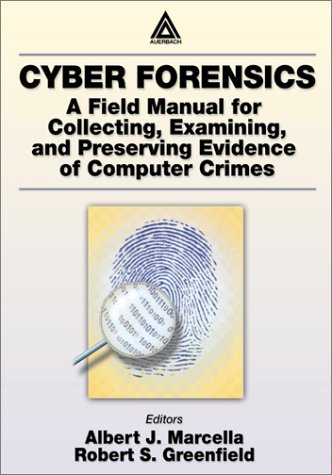
Not only has technology changed the science of forensics but it has also created a new forensics field, computer forensics. Michael Anderson is considered to be the father of computer forensics. He helped to develop the first computer forensic training classes for law enforcement officials. He also trained many college professors in the field and in turn helped create some of the first college level computer forensics classes.
"NTI - Michael R. Anderson." NTI - Home Page. 02 June 2009 http://www.forensics-intl.com/mra.html.
- Modern Marvels Video: Police Gear-Evidence Tech: Fingerprinting
- This video from the History Channel explains some early methods of obtaining evidence and the history of fingerprinting. It shows how problems with fingerprinting were solved with technology and Dna. http://www.history.com/video.do?name=modernmarvels&bcpid=1766638695&bclid=1803311455&bctid=1604855423
Start of Forensic Art
"Forensic art is a law enforcement artistic technique used in the identification, apprehension, or conviction of wanted persons. Forensic art encompasses several disciplines including composite art, image modification, age progression, post-mortem reconstruction and demonstrative evidence. However, composite art is traditionally the most commonly known discipline of forensic art" (Mancusi). The art of composite drawing has been used by police forces throughout time.
"Composite Art is an unusual marriage of two unlikely disciplines, police investigative work and art. The cop-artist, almost an oxymoron, possesses both skills. The artist can create a quality facial drawing with assured confidence. Though drawing skills are important parts of composite art, the real challenge is in the ability to interview and relate to a victim or witness. The purpose is to successfully gather, interpret and illustrate the information obtained from the victim's memory" (Mancusi).
In the past twenty years, composite art has evolved into forensic art. Forensic art possesses knowledge of victim psychology, post-mortem reconstruction and human aging.
works cited: Mancusi, Stephen. "Forensic Art." 2000. Forartist.com 02 June 2009
Here is a picture of a composite sketch. The composite sketch is completed in three stages; proportions, characteristics, and rendering.


"Composite Art is an unusual marriage of two unlikely disciplines, police investigative work and art. The cop-artist, almost an oxymoron, possesses both skills. The artist can create a quality facial drawing with assured confidence. Though drawing skills are important parts of composite art, the real challenge is in the ability to interview and relate to a victim or witness. The purpose is to successfully gather, interpret and illustrate the information obtained from the victim's memory" (Mancusi).
In the past twenty years, composite art has evolved into forensic art. Forensic art possesses knowledge of victim psychology, post-mortem reconstruction and human aging.
works cited: Mancusi, Stephen. "Forensic Art." 2000. Forartist.com
Here is a picture of a composite sketch. The composite sketch is completed in three stages; proportions, characteristics, and rendering.


First DNA fingerprint

Dr. Alec Jeffreys is holding a copy of the first DNA fingerprint profile. In 1985, Jeffrey introduced the idea of the DNA fingerprint while studying the myoglobin gene. He revealed that nucleotides were repeated several times in a specific order. His study also showed that these nucleotides varied from an individual to individual and could be identified using restriction enzymes and the technique was known as Restriction Fragment Length Polymorphism (RFLP). Within six months of Jeffreys discovery, genetic fingerprinting was used in a case to prove a Ghanaian boy was his parents' son.
more infromation on this article go to: http://www.expresshealthcaremgmt.com/20031115/technology01.shtml
Subscribe to:
Posts (Atom)

